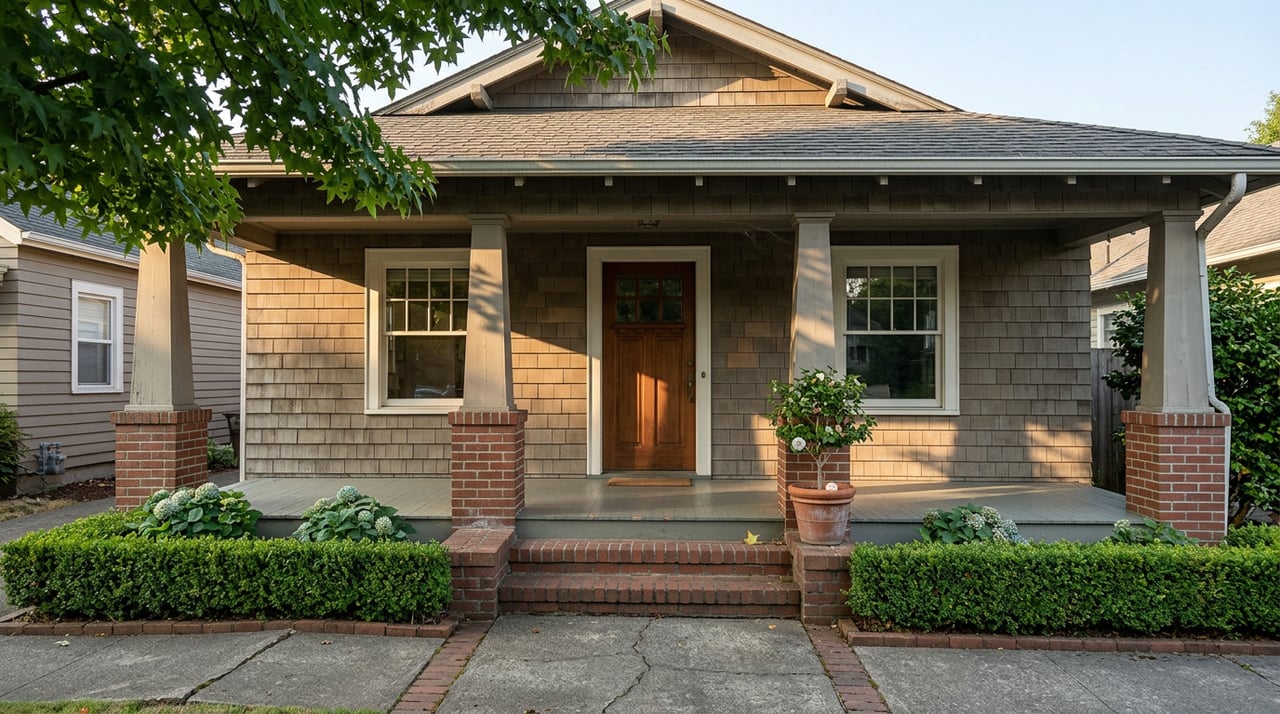
What actually kills a sale on a 1928 Craftsman in Curtis Park? Most sellers assume the answer is the same one it's always been: the home inspection. A crack in the foundation, a soft spot in the roof, something in the crawlspace nobody wanted to find. That's the fear that keeps sellers up the night before a buyer's inspector shows up with a flashlight.
That fear is outdated. In Sacramento's classic close-in neighborhoods, the inspection contingency isn't where deals go to die anymore. Something else is, and it shows up later in escrow, after everyone has already relaxed.
The Inspection Used to Be the Finish Line
For decades, the logic of a home sale in an older Sacramento neighborhood was straightforward. The buyer's inspector would flag the usual suspects in a pre-1960 house: an aging roof, some foundation settling, maybe a note about the electrical panel. The parties would negotiate a credit or a repair, the buyer would remove their inspection contingency, and both sides would treat that moment as the hard part being over.
That instinct isn't wrong. It's just no longer complete. Removing an inspection contingency clears one hurdle. It doesn't clear the one that has quietly become more consequential: whether the buyer's lender will actually let the loan fund, because whether the buyer can get a homeowners insurance policy on terms anyone expected when the offer was written.
Where the Friction Actually Sits Now
Homeowners insurance underwriting in California has tightened considerably, and old electrical and plumbing systems are squarely in the crosshairs. Many major carriers now require homes to have Federal Pacific Stab-Lok panels, Zinsco or Sylvania panels, or active knob-and-tube wiring replaced before they'll issue or renew a policy, and carriers increasingly rely on 4-point inspections at renewal for properties over 25 to 30 years old that specifically document panel type, roof condition, and plumbing. A panel that has sat in a Land Park garage since the Truman administration doesn't need to have caused a single problem to get flagged. It just needs to be recognized.
Old plumbing draws the same scrutiny for a different reason. When an insurer evaluates a home with aging galvanized pipe, it isn't just looking at current condition, it's assessing the likelihood of a future claim, and homes built before the 1960s often still carry the original galvanized steel or, in some cases, lead supply lines that prompted this concern in the first place. Some California carriers are now asking for proof that galvanized pipe has already been replaced before they'll approve coverage at all, with policies sometimes issued with plumbing exclusions or renewal withheld until updates are made.
Here's the part that catches sellers off guard: this friction tends to surface late. Inspection contingencies are customarily resolved early in escrow. Insurance, by contrast, usually gets locked in closer to closing, once the buyer's loan is moving toward final approval and the lender requires proof of a binder before funding. A buyer can waive their inspection contingency in good faith weeks earlier, only to discover near the end of escrow that their preferred carrier won't touch the panel or the pipes, and that the backup options come with premiums nobody budgeted for.
Why This Neighborhood's Housing Stock Makes It Unavoidable
This isn't a hypothetical for a handful of unlucky listings. It's close to the median condition of the housing stock in Sacramento's most sought-after historic neighborhoods. Curtis Park, developed largely in the 1920s and recognized today as a City-Designated Historic District, is built almost entirely of Craftsman bungalows, Tudor Revivals, and the occasional Spanish-style home from that era. East Sacramento's Fabulous Forties, running roughly from 38th to 48th Street between J Street and Folsom Boulevard, is a stretch of Tudor and Colonial Revival homes largely constructed in the 1920s and 1930s. Land Park's earliest section, College Tract, broke ground in 1927 around the park that gives the neighborhood its name, and the majority of its housing followed in the decade after. Even Tahoe Park and Colonial Heights, generally considered the newer pocket of this cluster, are filled with post-war ranches and mid-century homes from the 1940s and 1950s, which is still old enough to often carry original electrical and plumbing.
Nearly every listing in these neighborhoods was built before 1960, and the systems inside them were built for a different century of appliances and a different era of underwriting. That's the mechanism buyers, sellers, and even agents accustomed to newer subdivisions tend to miss: the age that makes these homes desirable to buyers is the same age that makes them a harder underwrite.
Here's what typically has to change to move a home back into standard-market insurability, and what it costs in 2026:
| System flagged by underwriters | What triggers the flag | Typical 2026 cost to fix |
|---|---|---|
| Electrical panel (FPE Stab-Lok, Zinsco, or unresolved knob-and-tube) | Original wiring from 1920s-1940s construction | $8,000 to $18,000 |
| Galvanized or cast-iron plumbing | Original supply lines never repiped | $12,000 to $30,000 or more |
| Sewer lateral | Original clay or cast-iron line from construction | $6,000 to $15,000 |
None of these numbers are small, and a full remediation across all three systems can easily land in the $15,000 to $40,000 range for a single property. That's not a renovation budget most sellers want to absorb before listing. But it's worth knowing the number exists before a buyer's lender surfaces it for you.
Even an Approved Policy Doesn't Guarantee a Paid Claim
There's a second layer to this that matters even for buyers who do secure coverage. Because galvanized pipe corrodes predictably from the inside out, some California insurers are treating galvanized-related leaks as gradual deterioration rather than sudden accidental damage, which is the category insurers are far more likely to deny. A buyer can close on a house, hold a valid policy, and still find that a pipe failure two years later isn't covered, because the underwriter's read of "gradual" excludes exactly the kind of failure these pipes are known for.
A buyer can close on a Craftsman with a wiring system from 1929. What they often cannot do is insure it, or later claim against it, on the terms they assumed when they wrote the offer.
What This Means for a Seller Before Listing
None of this means every seller in Curtis Park or Land Park needs to rewire or repipe a house before it hits the market. It means the smartest sellers are getting ahead of the question instead of letting a buyer's insurance shopping surface it for them late in escrow.
A practical step is assembling documentation before listing: the age and brand of the electrical panel, any prior rewiring or repiping permits pulled from the county, and a sewer scope if one has been done in the past few years. If a full system has already been updated, that documentation becomes a selling point, not just a defensive move, because it widens the pool of buyers whose lenders and carriers will clear the loan on standard terms rather than routing them toward a surplus-lines policy or the California FAIR Plan.
For sellers who've owned one of these homes for decades, often the case in a neighborhood built a century ago, this is rarely on the radar. A panel or a supply line that has quietly done its job since 1935 doesn't feel like a problem. To a 2026 underwriter, it reads as exactly that.
A Short FAQ for Sellers in These Neighborhoods
Does this matter if my buyer is paying cash? Less directly, since there's no lender requiring a binder before funding. But cash buyers still need coverage from the moment they hold title, and the same carrier restrictions apply to them. Many also think ahead to their own resale, so an unaddressed panel or galvanized system can still affect their offer or their timeline.
Is knob-and-tube wiring automatically a dealbreaker? Not automatically. Some insurers will still write a policy after an inspection confirms the wiring's condition and functionality, though usually at a higher premium or through a specialty carrier. What tends to close doors entirely is undisclosed or clearly deteriorated wiring discovered after the fact.
If I already upgraded my panel, does that guarantee my buyer gets approved? No single upgrade guarantees approval, since carriers weigh the whole system together. But a documented, permitted panel upgrade removes the single most common reason a standard-market carrier declines a pre-1960 Sacramento home outright.
What if my buyer's carrier approves them, then drops the policy later? This happens more often through claims than through renewal reviews. It's part of why documentation at the point of sale matters so much. A clean paper trail on prior work gives a buyer's future insurer less reason to revisit the file.
If you own a home in Curtis Park, Land Park, East Sacramento, or Tahoe Park and you're weighing when to list, the panel and the pipes are worth a conversation before the sign goes in the yard, not after an offer comes in. Lee Mahla has spent more than four decades helping Sacramento sellers get ahead of exactly this kind of friction, especially those who've called these neighborhoods home for years and are approaching a sale for the first time in a long time. Schedule a free consultation to talk through what your home's systems mean for your timeline before a buyer's underwriter tells you instead.